In the abrasive environments of mining and mineral processing, the operational integrity of slurry pumps depends heavily on the precision and durability of their internal components. Selecting a reliable Warman pump spare parts manufacturer is no longer just about procurement, but about managing the total cost of ownership through wear-life optimization.
The technical challenge lies in the aggressive nature of slurry, where combined erosion and corrosion can lead to rapid degradation of pump bodies and impellers. When spare parts fail to meet exact metallurgical specifications, the resulting misalignment or premature wear accelerates system failure, leading to unplanned downtime and significant revenue loss in high-capacity processing plants.
This analysis explores the engineering criticalities of slurry pump maintenance, focusing on material selection and the strategic importance of compatible replacement components to maintain hydraulic efficiency in severe-duty applications.


The efficacy of slurry pump spares is primarily governed by the metallurgical composition of the components. High-chrome alloys are typically utilized for high-abrasion environments due to their hard carbide phases, while natural rubber or polyurethane linings are preferred for finer, more corrosive slurries.
For structural components, the use of Grey Iron or Ductile Iron in pump bodies provides the necessary rigidity and vibration damping required to support the rotating assembly under high-pressure conditions.
Precision in casting and machining is paramount for replacement parts. Even a slight deviation in the impeller clearance or the fit of the pump body can lead to internal recirculation, which significantly increases the wear rate of the liners.
A high-quality spare part must ensure a seamless hydraulic transition. When the fit is not exact, turbulence increases at the interface of the components, creating localized high-velocity zones that "sandblast" the metal surfaces faster than the designed wear rate.
Engineering teams must verify that spare parts maintain the original OEM geometry to prevent cavitation and ensure that the pump operates at its best efficiency point (BEP).
In the design of slurry pump wear parts, engineers face a constant conflict between material hardness and structural toughness. While increasing the chromium content improves resistance to abrasive wear, it simultaneously increases the brittleness of the component.
The optimal solution involves a balanced microstructure, often achieved through controlled heat treatment processes that produce a matrix of tempered martensite with evenly distributed primary carbides.
Quantifying the longevity of spare parts requires a normalized assessment based on the slurry's characteristics. Factors such as particle size distribution, percentage of solids by weight, and the chemical pH of the medium dictate the wear profile.
The following data represents a relative engineering assessment of different material configurations when subjected to standard abrasive slurry conditions.
In tailings disposal systems, pumps are often subjected to fluctuating slurry densities and intermittent air intake. This volatility requires spare parts that can withstand transient shocks and varying abrasion levels without losing their structural integrity.
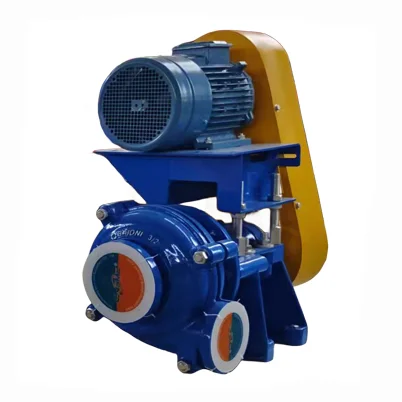
A typical deployment scenario involves the use of high-pressure slurry pumps where the pump body provides the primary containment. The integration of cast iron bodies with interchangeable wear liners allows operators to maintain the main pump structure while replacing only the high-wear internal surfaces.
The industry is shifting toward hybrid material configurations. While traditional cast iron provides stability, newer alloy blends are being developed to resist both the mechanical scraping of particles and the chemical attack of acidic process water.
R&D in this sector is currently focusing on "gradient materials," where the hardness is concentrated at the surface and the toughness is maintained in the core. This approach aims to eliminate the brittle failure risks associated with standard high-chrome parts.
Furthermore, the adoption of advanced casting simulations allows manufacturers to optimize the wall thickness of pump bodies, reducing weight without compromising the pressure rating or the longevity of the component.
Selecting the correct replacement component requires a systematic evaluation of the operating environment. Using a "one-size-fits-all" approach often leads to under-performance or premature failure.
Maintenance managers should evaluate the particle size and the chemical nature of the slurry to determine whether a metallic or elastomeric liner is more appropriate.
The following matrix provides a decision framework for selecting component configurations based on typical industrial application profiles.
| Configuration Type | Primary Material | Wear Resistance | Recommended Use Case |
|---|---|---|---|
| Basic Duty | Grey Cast Iron | Low-Medium | Water-like slurries / Low solids |
| Standard Duty | High Chrome Alloy | High | Mining / Abrasive tailings |
| Corrosive Duty | Natural Rubber | Medium-High | Acidic slurries / Fine particles |
| Severe Duty | Hard Metal / Ceramic | Ultra-High | High-velocity abrasive flow |
| Flexible Duty | Polyurethane | Medium | Variable particle sizes |
| Industrial Baseline | Ductile Iron Body | Structural | Main pump housing support |
The choice depends on the particle size and the abrasive nature of the slurry. High-chrome alloys are superior for large, sharp particles that would cut through rubber. Conversely, rubber liners are more effective for fine-grained slurries and corrosive environments where the rubber can absorb the impact of particles and resist chemical degradation.
Yes, if the dimensional tolerances are not strictly maintained. Slurry pumps rely on precise clearances between the impeller and the wear plate. Poorly manufactured spares can create gaps that allow slurry to leak back into the pump, increasing wear and reducing the total head and flow efficiency of the system.
Common signs include excessive vibration, leakage through the pump casing, or an inability to maintain prime. Since the pump body provides the structural foundation, any cracks or severe thinning of the cast iron walls can compromise safety and lead to catastrophic failure during high-pressure operation.
Highly acidic or alkaline slurries can accelerate the corrosion of metallic parts, even high-chrome alloys. In such cases, rubber-lined components or specialized stainless steel alloys are recommended to prevent the material from leaching or pitting, which would otherwise accelerate mechanical wear.
Yes, this is a common engineering strategy. For example, using a high-chrome impeller for maximum thrust and a rubber liner for the pump body to handle fine-particle abrasion. The key is to ensure that the materials are compatible in terms of thermal expansion and that the hydraulic fit is maintained.
Lifespan varies wildly based on slurry concentration and flow velocity. However, compared to standard cast iron, high-chrome parts typically offer a significantly longer service interval. Monitoring the pump's flow rate and pressure drop is the best way to predict the remaining life of the components.
Maintaining a high-performance slurry pumping system requires a strategic approach to component replacement that balances material hardness with operational toughness. The evidence suggests that precision-fit spare parts not only extend the intervals between maintenance but also preserve the hydraulic efficiency of the overall system.
For operators, the priority should be the verification of metallurgical standards and dimensional accuracy. By partnering with a technically competent Warman pump spare parts manufacturer, enterprises can minimize unplanned downtime and ensure that their pumping infrastructure remains resilient against the most aggressive industrial slurries.

bscribe newslette