Selecting a reliable partner for heavy-duty fluid transport involves more than comparing datasheets; it requires an understanding of material science and hydraulic efficiency. In mining and mineral processing, the cost of pump failure is measured not just in repair bills, but in total site downtime.
The shift toward more abrasive materials and higher head requirements has forced a transition from general-purpose pumps to specialized engineering. This necessitates a strategic partnership with an OEM slurry pump manufacturer capable of tailoring wet-end materials to specific ore characteristics.
This analysis examines the critical technical factors in slurry pump procurement, the role of high-chrome alloys in extending service life, and how to evaluate manufacturing capabilities for high-pressure applications.


Original Equipment Manufacturer (OEM) capabilities allow for the precise alignment of pump geometry with the specific gravity and particle size of the medium. Unlike off-the-shelf solutions, an OEM approach focuses on the synergy between the impeller vane design and the volute casing to minimize turbulence, which is the primary driver of localized erosion.
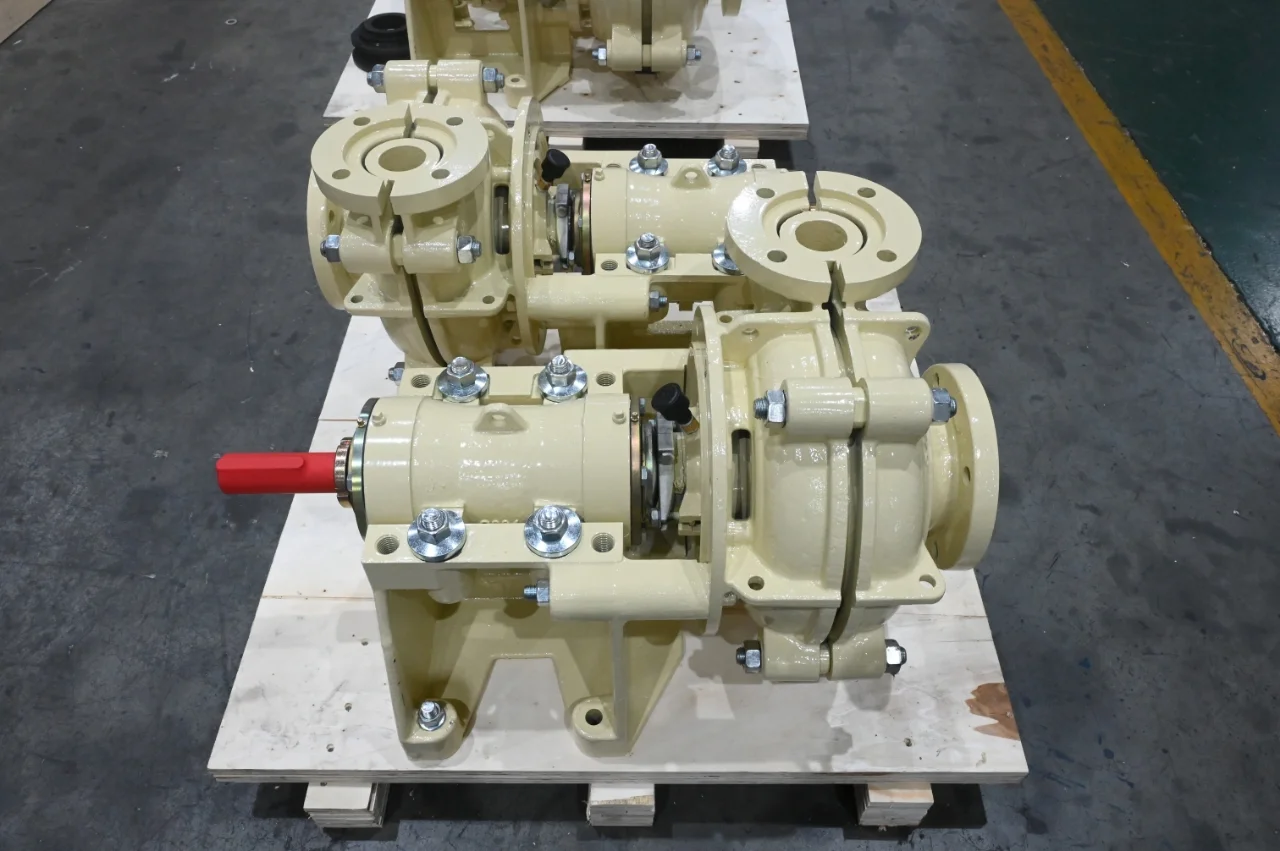
For instance, CNSME leverages over 20 years of expertise to produce pumps ranging from 1 to 30 inches. This scale of manufacturing ensures that whether a site requires a compact SL(R) light duty pump or a massive ZGB heavy duty unit, the structural integrity is maintained through standardized casting processes.
High-pressure slurry pumps, such as the ZJ series, are engineered to overcome significant static head and friction losses in long-distance transport. The core of these systems lies in the ability to maintain a high discharge pressure without compromising the seal or the shaft's structural stability. This is achieved through reinforced shafting—often using Carbon Steel or Stainless Steel (SS304/SS316)—and high-precision bearings from manufacturers like SKF or Timken.
The hydraulic design focuses on "closed type" impellers, which provide the necessary energy transfer to the slurry. In the 250ZJ model, the 5-vane closed impeller is optimized for flow rates between 300 and 1480 m³/hr, ensuring that the fluid velocity remains above the critical settling velocity to prevent pipe blockage.
Furthermore, the integration of expeller seals or mechanical seals is critical. In high-pressure environments, the seal must withstand the abrasive nature of the fluid leaking back toward the bearing housing, making the choice of shaft sleeve material (Ceramic or Tungsten Carbide) a deciding factor in the pump's Mean Time Between Failures (MTBF).
The selection of wet-end materials is the most critical decision in slurry pump specification. While natural rubber and polyurethane are excellent for fine, non-abrasive particles or corrosive chemicals, they fail rapidly under the impact of large, sharp-edged minerals. This is where high-chrome alloys become indispensable.
High chrome alloy (similar to ASTM A532) is the only viable solution for high-pressure heavy duty pumps where abrasion and erosion resistance are paramount; in these specific high-head configurations, elastomer alternatives are technically insufficient to withstand the kinetic energy of the slurry.
By utilizing alloys like A05A33 and A49 for impellers and liners, manufacturers can ensure that the pump maintains its internal clearances for a longer duration. This not only reduces the frequency of replacements but also prevents the drop in efficiency that occurs as the volute liner wears down and increases internal recirculation.
The 250ZJ model serves as a benchmark for 10-inch discharge slurry pumps. Its capability to handle heads up to 97.5 meters makes it a primary choice for filter press loading and flue gas desulphurization. The efficiency of these pumps is closely tied to the impeller diameter, which can vary from 600mm to 1030mm to match the specific duty point of the operation.
To understand the relative value of different pump configurations, we evaluate them based on a "Performance Index" that weights head capacity, flow stability, and wear resistance. This helps engineers determine if a heavy-duty ZJ pump is more cost-effective over a 5-year lifecycle than a series of lighter-duty pumps.
In power plants, slurry pumps are critical for ash handling and flue gas desulphurization (FGD). These environments require pumps that can handle a constant flow of abrasive particles without clogging. The ZJ series is particularly effective here due to its high head capability, allowing ash slurry to be moved from the boiler area to storage ponds with minimal intermediate pumping stations.
In mineral processing, the focus shifts to "tailings disposal" and "mill underflow." For these applications, pumps like the MD(R) Mill Underflow Pump are used to transport thick, high-density slurries. The challenge in these scenarios is managing the viscosity of the fluid, which can cause significant pressure drops and increase the wear on the impeller vanes.
The industry is moving toward "hybrid lining" strategies, where different parts of the pump use different materials based on the localized wear patterns. While the impeller may require high chrome for impact resistance, the volute liner might benefit from a different alloy depending on whether the primary wear mechanism is sliding abrasion or impingement.
Another significant trend is the optimization of impeller geometry through Computational Fluid Dynamics (CFD). By reducing areas of high turbulence, an OEM slurry pump manufacturer can significantly extend the life of the wet-end parts without changing the material chemistry.
Finally, the integration of smart monitoring—such as vibration analysis and wear sensors—is allowing operators to transition from scheduled maintenance to condition-based maintenance. This reduces the risk of catastrophic failure and optimizes the replacement cycle of high-cost components like the 250ZJ's large-diameter impellers.
Selecting the right pump requires a matrix-based approach. Engineers must balance the required flow rate and head against the abrasiveness of the slurry and the available power. A common error is over-specifying the pump size, which can lead to inefficient operation and accelerated wear due to excessive fluid velocity.
A comprehensive evaluation should include the "Total Cost of Ownership" (TCO), which considers the initial purchase price, energy consumption, and the cost of spare parts over the expected life of the pump. In high-pressure applications, the cost of a high-chrome alloy impeller is often offset by its significantly longer service life compared to cheaper alternatives.
The following table provides a conceptual framework for matching pump series to specific industrial requirements, highlighting the trade-offs between material choice and application environment.
| Application Type | Recommended Series | Primary Material | Key Constraint |
|---|---|---|---|
| Filter Press Loading | ZJ Series | High Chrome | High Discharge Pressure |
| Tailings Transport | ZGB Heavy Duty | Chrome / Rubber | Abrasive Particle Size |
| Mill Underflow | MD(R) Series | Hard Metal Alloy | Slurry Density/Viscosity |
| Chemical Slurry | SHR Rubber Lined | Natural Rubber | Chemical Corrosion |
| Sump Drainage | SV(R) Vertical | Stainless Steel | Vertical Lift Height |
| Light Duty Waste | SL(R) Series | Polyurethane | Low Solids Content |
An OEM manufacturer possesses the internal capability to design, cast, and machine pump components. They can modify impeller geometries or alloy compositions to meet specific site requirements. In contrast, a distributor typically provides standardized products from a catalog without the ability to perform custom engineering or material optimization for extreme wear conditions.
High chrome alloys (like A05A33) should be used when the slurry contains large, sharp particles or when the pump operates at high pressures and velocities. Rubber linings are superior for fine particles and corrosive fluids but will tear or erode quickly under the high-impact kinetic energy found in heavy-duty mining or high-head ZJ series applications.
Impeller sizing is determined by the required Total Dynamic Head (TDH) and the flow rate. For the 250ZJ, options range from 600mm to 1030mm. Engineers must calculate the friction loss of the piping and the static lift; a larger impeller increases the head but requires more power and may increase wear if the pump is operated too far from its Best Efficiency Point (BEP).
The most common causes are abrasive infiltration past the seal and misalignment of the pump and motor. To mitigate this, using higher-grade materials like Tungsten Carbide or Ceramic for the shaft sleeve is recommended. Additionally, ensuring the use of an expeller seal can prevent the slurry from reaching the bearing housing, thereby extending the sleeve's life.
The ZJ series utilizes a high-head design and a robust 5-vane closed impeller to maintain the velocity necessary to keep heavy solids in suspension. By operating at speeds between 490 and 980 rpm, these pumps balance the need for high pressure with the need to minimize the abrasive velocity that causes liner wear.
Generally, no. Polyurethane is excellent for medium-duty pumps and certain liners, but in high-pressure, heavy-duty pumps (like the ZJ or ZGB series), the energy of the particles is too high for elastomers. High chrome alloys are the industry standard for these applications because they provide the necessary hardness to resist surface erosion.
The efficiency of a slurry transport system is only as strong as its weakest component. Transitioning from generic procurement to a partnership with a specialized OEM slurry pump manufacturer allows operators to optimize material choice and hydraulic design for their specific ore or waste characteristics.
Whether deploying the high-pressure capabilities of the ZJ series in a power plant or the ruggedness of ZGB pumps in a mine, the focus must remain on the synergy between material science and operational duty. Investing in high-chrome alloys and precision-engineered components ultimately reduces the total cost of ownership and ensures maximum site uptime.

bscribe newslette